
Getting Back in Step: Amy’s Story of Commitment, Consistency, and PoNS Therapy®
When the Diagnosis Changes Everything
Amy was 27 when she was diagnosed with Multiple Sclerosis (MS) in 2012—but her story started earlier, with something subtle.
“It all began with foot drop while I was running,” she recalls. “It was taking longer and longer to recover after exercise.” Working within the hospital system, Amy’s senses told her something wasn’t right. Although she was initially told the foot drop wasn’t MS, she trusted her gut and pushed for further testing. Soon, brain scans confirmed what she had feared.
“I was terrified,” she says. “MS was my worst-case scenario. It was also my third autoimmune diagnosis, so it was pretty scary.”
Over the years, additional challenges compounded the impact of MS. A serious car accident in 2015 left Amy with a shattered pelvis, femur, and hip—further affecting her ability to walk. Slowly, almost imperceptibly at first, her world began to shrink.
In the years since the accident, she noticed a slow progression. “I just watched my steps go down on my Apple Watch,” she says. “Before PoNS®, I was averaging about 4,500 steps a day. And with my osteoporosis, I was quite afraid of falling.”
A Decision to Start—Not Wait
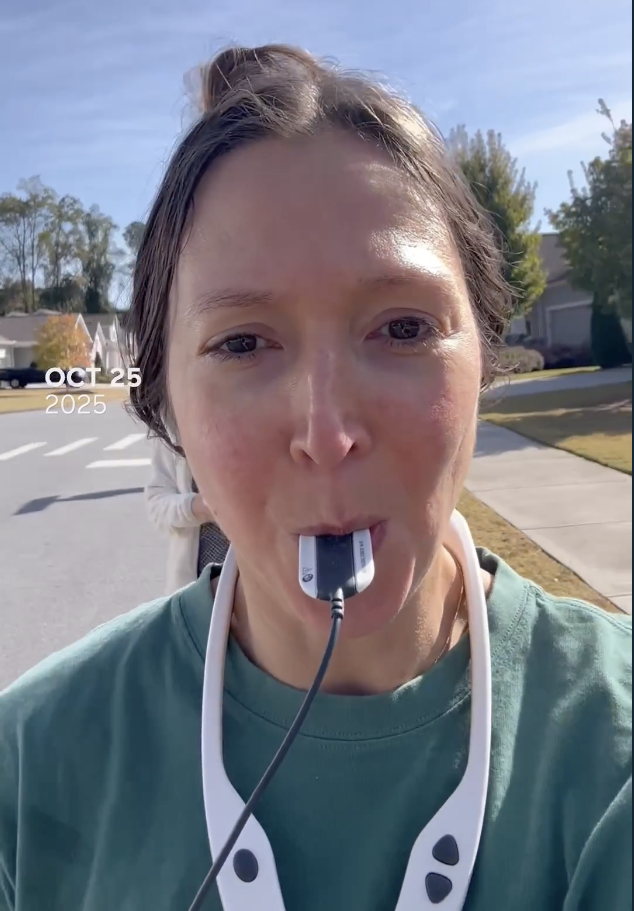
Amy first learned about PoNS Therapy during an appointment with her neurologist in 2025. On paper, her condition appeared stable. In reality, she felt herself progressing further into MS.
“My doctor was writing down in his notes that I was stable,” Amy says. “But I knew I wasn’t. My world was getting smaller.”
Her neurologist mentioned PoNS Therapy as a potential addition to her treatment plan, and Amy’s first thought was that it might be something to consider further down the line. But she remembers her husband’s response clearly: Why would you wait? Let’s start now.
That moment became a turning point.
“So I committed,” Amy says. “Once I made the decision I was going to do it, I knew it was as good as done. ” She arranged partial leave from work, managing only the necessary items for her team so she could fully dedicate herself to therapy. “I was still working onsite at the hospital one day per week, still getting in all my therapy sessions. Those days were tough—but, even if I couldn’t have gotten the time off from work, I would have done PoNS regardless.”
What PoNS Therapy Demands—and Gives Back
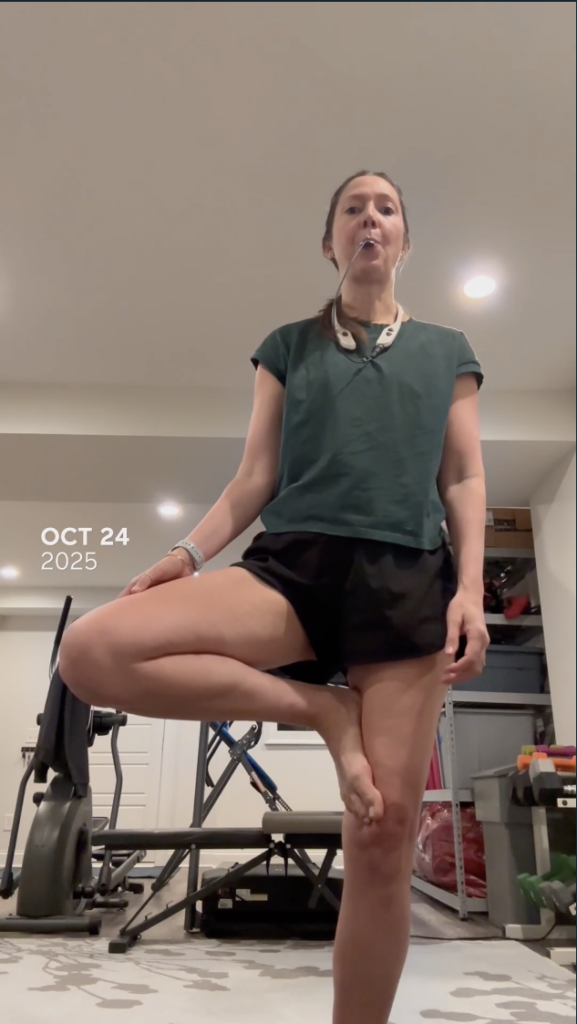
PoNS Therapy combines use of the Portable Neuromodulation Stimulator (PoNS) with targeted rehabilitation exercises over 14 weeks. The device delivers stimulation to the nerves on the surface of the tongue, helping activate brain pathways involved in movement and coordination—while the structured therapy program reinforces consistency and intentional practice to support meaningful progress.
Amy admits she hadn’t worked with a physical therapist for several years. “I was consistently exercising,” she says. But after completing PoNS, she claims “the PT made all the difference.”
So then what drove her adherence?
“My love of walking,” Amy explains. “It’s my way to be outside, to exercise, and to be with friends. I love the act of it.” There wasn’t a chance in the world she was ready to give up the joy of walking, so she made the most of her chance to Get Back In Step With Life.
Just as important was mindset. “Since my diagnosis, I radically take control of the things I can,” she says. “We have more control over our mindset than we realize, and you can use that to create the future you want. Being positive isn’t something you either have or don’t have—it’s something you practice. We influence our future health and function more than we think, so it’s important to have keep that perspective.”
When Progress Feels Hard
PoNS Therapy isn’t easy. Amy recalls falling during an early session—her physical therapist catching her mid‑fall.
“The gut reaction of a fall is that it’s the worst thing in the world,” she says. “But I was being pushed and challenged to ensure I was getting the results I wanted, and eventually my body caught up to where my brain wanted to be. If I wasn’t being challenged, I never would have fallen— I learned from it.”
“I didn’t spend any time in the ‘will I, won’t‑I, won’t‑I’ conversation day to day,” she says. “I made a decision before starting that I wouldn’t miss sessions and I followed through. Some days were tougher than others. But when something feels challenging, I like to believe that means it’s helping.”
When Things Start to Click
For Amy, progress wasn’t always obvious—especially in the early weeks. It was often others who noticed first.
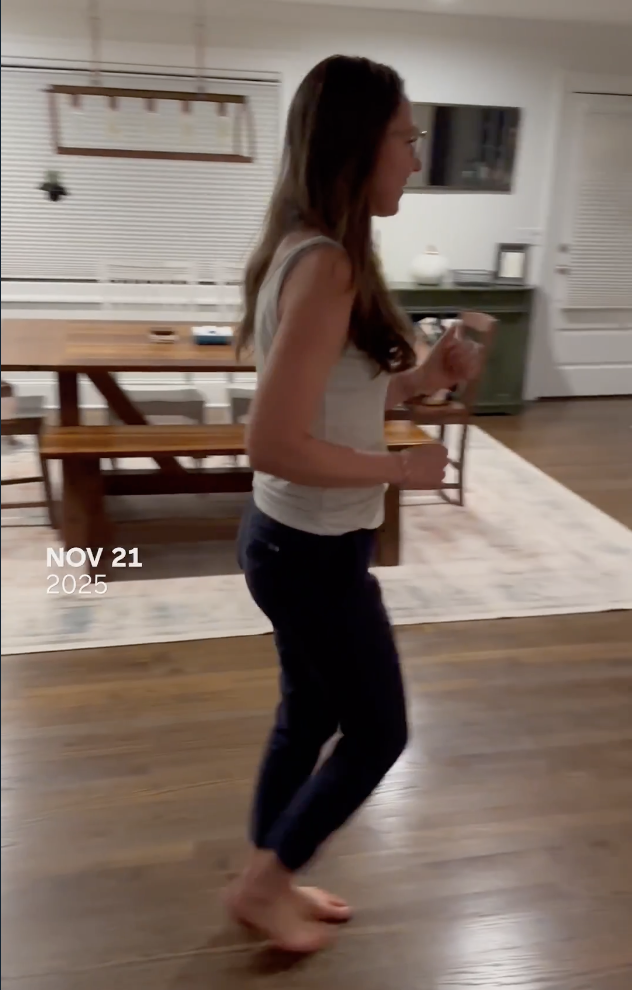
“When my husband would say, ‘Wow,’ after I’d mindlessly perform a once-difficult household task, that’s when it hit me,” she says. “It’s the people around me seeing the improvement that gets me out of my head and back on my feet.”
These moments aligned with what clinical data has shown. In the PoNSTEP study, where researchers followed 43 people with MS who were dealing with walking difficulties, those who adhered closely to the 14‑week PoNS Therapy plan saw statistically significant improvements in gait that were sustained for at least six months. The takeaway was simple: showing up consistently matters.
PoNSTEP Study Results
74%
of people who maintained a minimum of ≥70% adherence to the program improved their Dynamic Gait Index (DGI) scores by 5 points
50%
of those who followed the program 85–100% of the time improved by nearly 7 points — a major gain in walking ability
Amy’s Journey, Captured on Film
Throughout her PoNS Therapy journey, Amy documented her progress on video—from early uncertainty to visible changes in confidence and movement. Watch her mini‑documentary to see how commitment and consistency can bring the real, sustained results patients have come to expect from PoNS.
Individual results may vary. Talk to your healthcare provider to see if PoNS Therapy is right for you.
The PoNS® device is indicated for use as a short term treatment of gait deficit due to mild to moderate symptoms from multiple sclerosis and is to be used as an adjunct to a supervised therapeutic exercise program for adults 22 years of age and over by prescription only.
Life After the 14 Weeks
After completing therapy, Amy noticed changes she hadn’t expected.
“I don’t dread where we park anymore,” she says. “I don’t spend extra energy thinking about how far I have to walk to get to my seat at a concert.”
Small wins mattered most. “I walked from the living room to the shower and didn’t remember getting there,” she says. “Because I didn’t have to think about it. That’s a win.”
She’s now averaging closer to 6000 steps a day, doing Barre3 workouts, and even running again with the help of a zerogravity‑gravity harness and some supervision under her PT. Her goals are bigger, too.
“I would love to walk a consecutive 5k again,” Amy says. “I’m building my endurance so foot drop doesn’t get in the way.”
When asked about the advice she’d have for others considering PoNS Therapy, Amy doesn’t hesitate:
“Decide ahead of time that you can and will do it. Don’t waste energy in the ‘will I, won’t‑I, won’t‑I’ conversation. Show up for yourself everyday with love. Sometimes that’s a little tough love and sometimes it’s gentle love. But always with love.”
She also encourages people to notice—and celebrate—the nearly intangible victories. “Tell people about them,” she says. “Even if they seem silly.”
Getting Back in Step
Amy’s story reflects what both clinical data and lived experience continue to show: PoNS Therapy works best when patients commit to it, stay consistent, and lean on their care team for support.
For people living with MS, adherence isn’t just about completing a program—it’s about reclaiming mobility, confidence, and independence.
As Amy puts it simply: “It feels like my body is listening to me again.”
Inspired by Amy’s story?