
How PoNS® Helped More People Get Back In Step With Life in 2025
As 2025 comes to a close, we’re reflecting on a year filled with perseverance and powerful stories from the PoNS community. From real-world patient experiences to new clinical insights, PoNS Therapy® helped more people take meaningful steps toward improved mobility this year. Below are some highlights from the clinical milestones and personal journeys that shaped 2025.
PoNS in Review: A Patient’s Perspective
This year, we were fortunate to hear directly from Mariska Breland—an MS patient, author, and co-founder of The NeuroStudio. Mariska completed PoNS Therapy in 2024 and later reflected on her experience in a PoNS blog, describing what surprised her and how the therapy strengthened her confidence in movement.
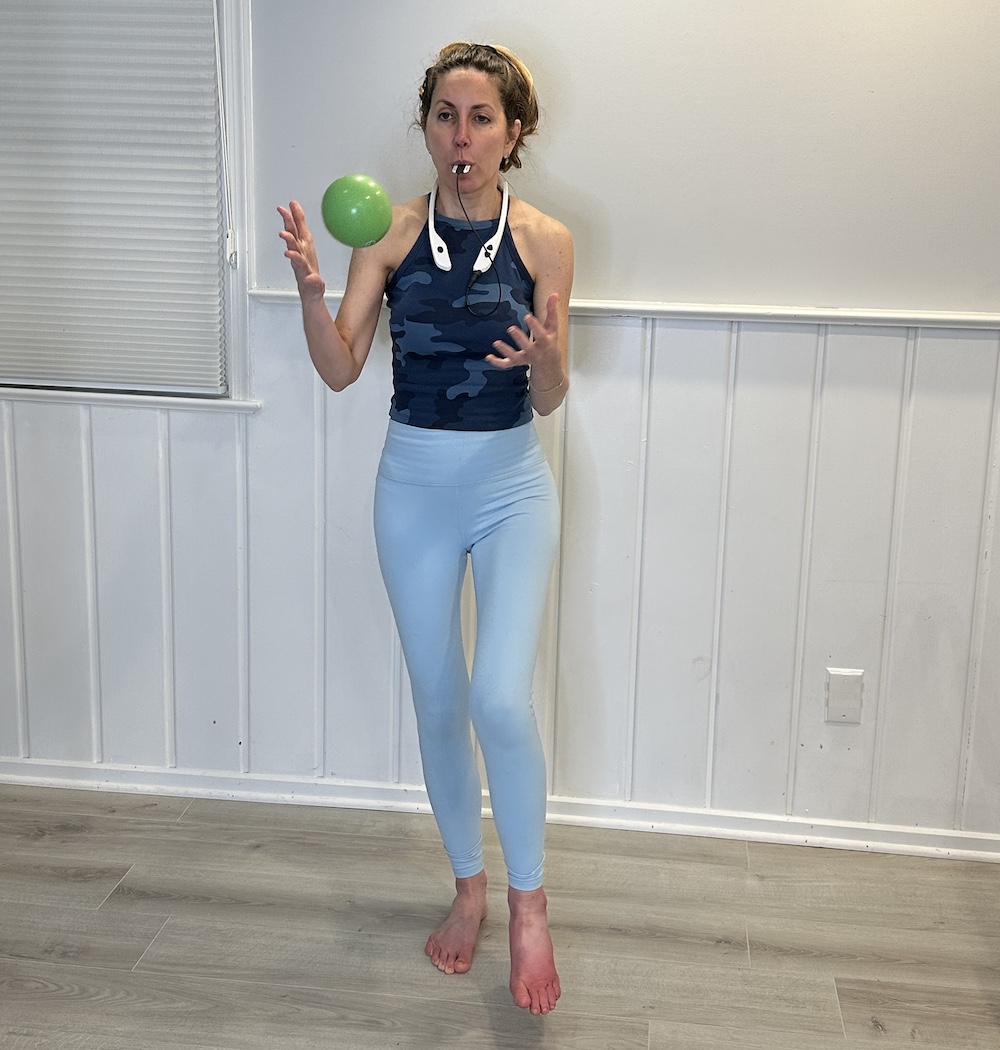
“Seeing the toes on my left foot move again for the first time in years really motivated me to see how much more they’d move the next day. I’m walking as I was 10 years ago, with minimal foot drop.”
This is one individual’s experience, speak to your doctor to see if PoNS is right for you.
The Science and Stories That Shaped 2025
PoNSTEP Data Was Presented at CMSC
One of the biggest milestones of the year was the presentation of new PoNSTEP clinical data at the 2025 Consortium of Multiple Sclerosis Centers (CMSC) Annual Meeting. Dr. Deborah Backus, a leading researcher in neurorehabilitation, unveiled findings that strengthened the body of evidence supporting PoNS Therapy. Her presentation highlighted the fact that commitment to therapy matters to achieve durable effects. In the PoNSTEP Study, participants who maintained a strong adherence to their therapy (meaning that they consistently followed their 14-week therapy plan) had a statistically significant average improvement in their Dynamic Gait Index (DGI). This improvement was maintained for at least 6 months after treatment completion1:- 50% of participants who maintained 85-100% adherence to PoNS Therapy saw animprovement of nearly 7 points in DGI scores1
- 74% of those who maintained 70% adherence gainedat least a 5-point improvement in DGI scores from baseline to end of treatment1
Kevin Stepped Up for Walk MS
In 2025, we witnessed many personal triumphs—but one that deeply touched our community was Kevin Byrne’s determination to participate in Walk MS. A U.S. Army veteran and MS advocate, Kevin had long struggled with his gait and leg weakness that affected his walking ability and daily independence.
Never Stop. Never Quit. Through his stong commitment to PoNS Therapy—even on difficult days—he began to regain strength, coordination, and confidence in his walking ability. Kevin’s story is a powerful reminder that progress isn’t always linear—but perseverance paired with the right tools can help people achieve milestones they once thought were behind them.

Kerrie Set Her Sights on New Adventures
Travel often brings unique challenges for those with MS, from fatigue to gait instability to the demands of navigating long distances. But in 2025, Kerrie shared how PoNS Therapy helped her move past those barriers and rediscover the joy of exploring the world.
The Journey Forward. Once she began therapy, she noticed meaningful changes: increased steadiness, greater ease with physical obstacles like airports and uneven ground, and most importantly, a renewed sense of confidence in her walking ability. The “what-ifs” that once shaped her decisions started to feel less limiting. Kerrie’s experience shows how mobility gains can help her reconnect with experiences that matter most.
“The benefits are unbelievable…My husband and I went to Belize and walked through a jungle. Before [PoNS] treatment, I wouldn’t have even considered it.”

Insurance Coverage Gained Momentum
Progress continued this year as more patients, spoke openly about navigating insurance coverage for PoNS Therapy. Several private insurance providers—including Aetna, Anthem, Anthem Multiplan, Cigna, and UnitedHealthcare—have authorized out-of-network claims. Our goal moving into 2026 is to expand coverage, streamline the process, and help more people access the therapy they need.
If you’re beginning your PoNS journey—or currently pursuing a claim—our team is here to support you. For assistance with insurance inquiries, reach out to us at: [email protected]
Progress Toward a Stroke Indication
We are excited to share that we have submitted to the FDA for a stroke indication and look forward to a response in the first quarter of 2026. This marks an important step toward expanding access and improving outcomes for stroke patients.
Looking Ahead to 2026
As we reflect on a year filled with scientific advancement, inspiring patient stories, and growing momentum in accessibility, one thing is clear: the future of neurorehabilitation is moving forward—and we’re committed to moving with it.
Ready to explore what PoNS Therapy could mean for you?
